


Established
1992
Franchise Units
114
Minimum Investment
$366,240
Franchise Fee
$25,000
Total Investment Range
$652,496
Home Based
No
Description
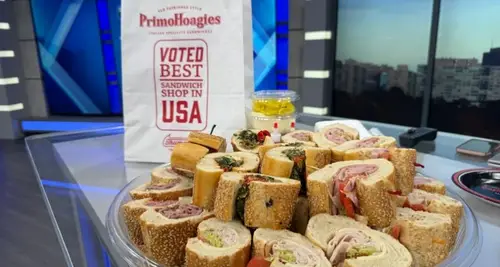
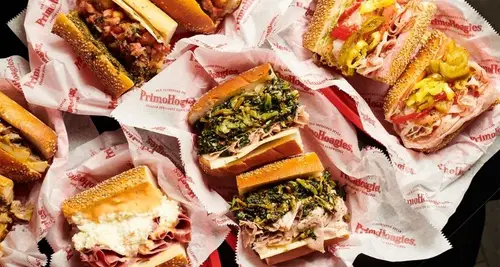
PrimoHoagies started in South Philadelphia, and the menu still feels like it belongs there. The sandwich franchise builds its made-to-order hoagies on signature seeded rolls with deli meats, cheeses and fresh toppings. A customer might stop by for an Italian hoagie on a lunch break, pick up sandwiches for the family or order a tray for a weekend gathering.
For franchise owners, those orders call for different skills. A busy lunch shift depends on having the sandwich line ready before the first rush. Catering takes advance planning, accurate packing and good communication with the person placing the order. A shop can build relationships with nearby workplaces and community groups while serving customers at the counter, through online pickup and by delivery.
From its Pennsylvania and New Jersey base, PrimoHoagies has brought its Philadelphia-style menu to markets including New York, the Carolinas, Texas and Colorado.
Why Invest in a PrimoHoagies Franchise?
- A sandwich with a recognizable identity. The seeded roll and Italian deli-style menu give owners a specific product to build local marketing around. The menu works for a quick solo lunch and scales naturally to trays for groups.
- Several ways to make a sale. Counter orders, digital pickup, delivery and catering reach customers in different situations. Sides and drinks can add to individual orders, while group orders can bring in business from nearby employers, teams and event organizers.
- A menu that rewards consistent execution. A sandwich shop gives managers concrete tasks to coach and measure every shift, from portioning and prep to line speed and order accuracy. Those basics matter most when the lunch rush and a large catering order arrive at the same time.
- New development and resale opportunities. Qualified buyers can explore opening a new shop or acquiring an existing restaurant where one is available. Existing-store opportunities have included Greater Philadelphia and South Jersey. Multi-unit operators can explore expansion where suitable stores or markets are available.
Background
Brand Name: PrimoHoagies
- Established: 1992 in South Philadelphia, Pennsylvania
- Founding History: Richard Neigre purchased the original Philadelphia shop in 1992 and helped develop the business into a franchise system.
- Ownership and Leadership: PrimoHoagies is privately held and family-owned. Nicholas Papanier Jr. serves as owner, president and CEO and has led the company as CEO since 2019.
- Franchisor and Headquarters: PrimoHoagies Franchising, LLC, based in Westville, New Jersey.
- Franchised Units: 114
- Company-Owned Units: 11
- Total U.S. Units: 125
- Industry and Market Presence: Quick-service restaurants, specialty sandwiches and catering. The business grew from a single Philadelphia deli into a multi-state U.S. chain, with its Mid-Atlantic roots still visible in the menu and brand.
Support Training
Pre-opening preparation. Owners move through site selection, restaurant buildout and training ahead of opening. The opening plan brings together equipment and station setup, point-of-sale systems, initial inventory and staff scheduling so the team can practice before serving customers.
Classroom instruction and in-store training. The initial program combines classroom instruction with hands-on work in a training restaurant. Owners and managers practice meat and cheese slicing, sandwich assembly, prep, front-counter service, point-of-sale transactions and catering tray assembly. Working through a simulated restaurant day helps managers see how the stations fit together and where service can slow down.
Business and systems training. The curriculum also covers hiring and orientation, vendor ordering, inventory management, profit-and-loss reporting and use of the franchise dashboard. Training on loyalty tools and third-party ordering platforms helps the team handle orders arriving from several channels during a shift.
Marketing and ongoing operations. The system combines brand-level promotions and loyalty tools with franchisee-funded local advertising. At store level, owners can focus their marketing on the customers most likely to order regularly, such as nearby workplaces and local groups. Operating standards, reporting systems and approved suppliers give managers a common reference for running the restaurant after opening.
Ideal Candidate
PrimoHoagies suits owners who enjoy managing a fast-moving food-service business and are comfortable spending time on the floor with their team. Experience in quick-service restaurants, deli operations, catering or multi-unit retail is particularly relevant. Owners need to be able to recruit and train shift leaders, plan staffing around peak hours and track labor, food usage and waste closely.
A strong candidate also sees catering as part of the job. Building that side of the business means introducing the shop to office managers, schools, leagues and event organizers and following through when they place an order. Investors working with a general manager should look for someone who can coach the line, handle a rush and build relationships outside the store.
A promising location has straightforward pickup access and a mix of residential, workplace or retail traffic. Buyers should have sufficient capital for the buildout and enough cash to cover payroll, inventory and occupancy during the opening months.
Financial Detail
| Investment Category | Estimated Amount (USD) |
|---|---|
| Total Initial Investment | $366,240–$652,496 |
| Minimum Investment Required |
$366,240,
|
| Franchise Fee | $25,000 |
|
Brand Fund Contribution
|
3% of gross sales
|
| Local Marketing Requirement |
The greater of 1% of gross sales or $9,000 per year
|
|
Royalty Fee
|
6% of gross sales
|
| Working Capital | $40,000 – $75,000 |