


Established
1990
Franchise Units
300
Minimum Investment
$150,000
Franchise Fee
Inquire
Total Investment Range
$500,000
Home Based
No
Description
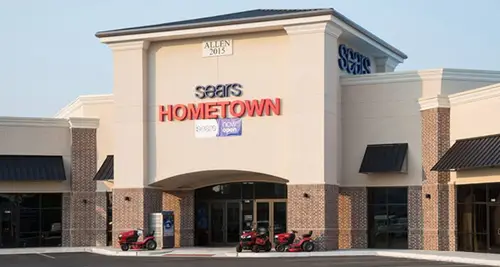
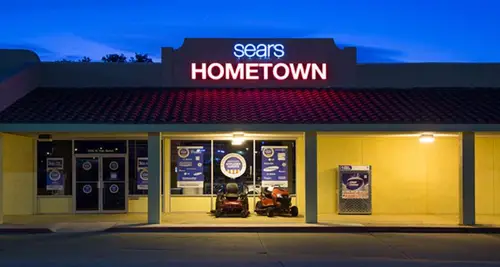
Sears Hometown & Outlet Stores represent a compelling franchise opportunity built on one of the most recognizable retail legacies in the United States. Designed for entrepreneurs who want to operate a locally focused retail business while benefiting from national brand recognition, this franchise model blends hometown service with outlet-style pricing on essential home products.
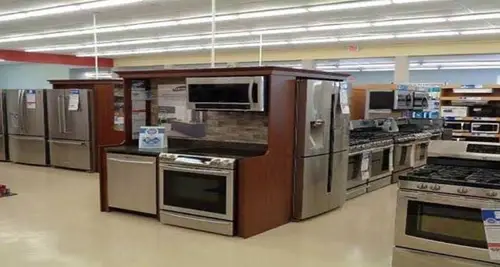
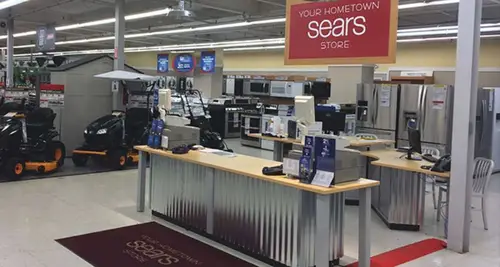
The concept specializes in major home appliances, lawn and garden equipment, tools, mattresses, and select home improvement products. Unlike traditional big-box retailers, these stores are intentionally sized for small towns, suburban markets, and underserved trade areas where personalized service and product expertise matter most. Customers are drawn by competitive pricing, trusted product lines, and the reassurance of buying from a brand they have known for generations.
This franchise model focuses on practical, needs-based retail categories that remain relevant regardless of economic cycles. Homes constantly require maintenance and upgrades, and appliances are replacement-driven purchases. By combining centralized buying power with local ownership, Sears Hometown & Outlet Stores create a retail environment that balances value, trust, and community connection.
Why Invest in This Franchise?
Investing in Sears Hometown & Outlet Stores offers a unique blend of brand strength and operational independence. Franchisees benefit from national-level merchandising and purchasing support while maintaining control over day-to-day operations in their local market.
Key advantages include:
• Strong brand recognition that drives customer trust and walk-in traffic
• Focus on essential home products with consistent, year-round demand
• Smaller store footprints compared to traditional department stores
• Ideal positioning in rural and secondary markets with limited competition
• Centralized inventory sourcing and merchandising support
• Multiple revenue streams including in-store sales, special orders, and delivery services
Background
Established Year: 1990
Founders: Founded by Richard W. Sears and Alvah C. Roebuck under the Sears brand
Franchise Active Units: 300+ locations across the United States
Brand Journey & Company History:
Sears began as a mail-order catalog business in the late 19th century and grew into one of the most influential retail brands in American history. As consumer shopping patterns evolved, the company introduced the Hometown and Outlet store formats to better serve local communities, rural markets, and value-driven customers. These formats focused on core, high-demand categories such as appliances, tools, lawn and garden equipment, and mattresses—products with consistent replacement demand and strong brand loyalty. The franchise and dealer-based structure allowed independent owners to operate community-focused stores while benefiting from national merchandising, sourcing, and brand recognition.
Ownership & Business Model:
Sears Hometown & Outlet Stores operate under a franchise and dealer-supported retail model, allowing local entrepreneurs to own and manage individual locations. Franchisees leverage centralized purchasing systems, established supplier relationships, and standardized operational frameworks while maintaining flexibility to adapt to their local market dynamics.
Market Presence in the USA:
The brand has maintained a strong footprint in suburban, secondary, and rural markets across the United States. Stores are strategically positioned in trade areas where large-format department stores are less practical, giving franchisees access to loyal customer bases seeking trusted products and personalized service.
Industry Category:
Home appliances, tools, lawn and garden equipment, mattresses, and home improvement retail
Support Training
Franchisees receive structured support across all phases of business ownership, from pre-opening preparation to long-term operational growth.
Pre-Launch Support
• Guidance on site selection and trade area evaluation
• Store design, layout, and merchandising recommendations
• Assistance with initial inventory planning and product assortment
• Coordination with approved suppliers and logistics partners
Training & Operational Support
• Initial training covering sales processes, inventory control, and customer service
• Point-of-sale system and ordering platform training
• Operational manuals and standard operating procedures
• Access to experienced support teams for ongoing guidance
Marketing & Brand Support
• National and regional promotional campaigns
• Branded marketing materials and seasonal advertising programs
• Local marketing strategy guidance for each trade area
• Merchandising calendars and promotional planning tools
Ongoing Support
• Continuous product updates and category expansions
• Performance monitoring and operational coaching
• Business insights based on sales and inventory data
• Adaptation support based on market trends and customer demand
This end-to-end support structure allows franchisees to focus on execution, customer relationships, and sales growth.
Ideal Candidate
The ideal Sears Hometown & Outlet Stores franchisee is a motivated owner-operator or hands-on investor who values community engagement and operational involvement.
This opportunity is well suited for:
• Entrepreneurs with retail, sales, or customer-facing experience
• Individuals comfortable managing inventory, staffing, and daily operations
• Business owners passionate about home improvement and durable goods
• Investors seeking a stable, needs-based retail business
• Operators targeting suburban, rural, or secondary markets
Successful franchisees are relationship-driven, service-oriented, and committed to building long-term value within their local community.
Financial Detail
| Financial Component | Estimated Details |
|---|---|
| Total Investment Required | $150,000 – $500,000+ |
| Minimum Investment |
Approximately $150,000
|
| Franchise Fee | Brand licensing fee (structure varies) |
| Store Size | Typically small to mid-size retail footprint |
| Infrastructure & Build-Out Cost | Leasehold improvements, fixtures, signage, equipment |
| Initial Inventory Investment | One of the largest cost components, based on store size and product mix |
| Marketing & Advertising Budget | Local launch marketing and promotional campaigns |
| Working Capital Requirement | 3–6 months recommended for operating expenses |
| Royalty / System Fees | Ongoing fees based on sales or purchasing structure |
| National Marketing Contribution | Applicable as per franchise system guidelines |
| Primary Revenue Streams | Appliances, tools, lawn & garden equipment, mattresses, special orders, delivery services |
| Expected ROI | Market-dependent; driven by inventory turnover and local demand |
| Break-Even Timeline | Approximately 18–36 months |