Cheba Hut Franchise Growth Powered by Grassroots Marketing
Cheba Hut franchisee Wahi Brands is expanding across multiple states using grassroots marketing and community outreach to fuel restaurant growth.
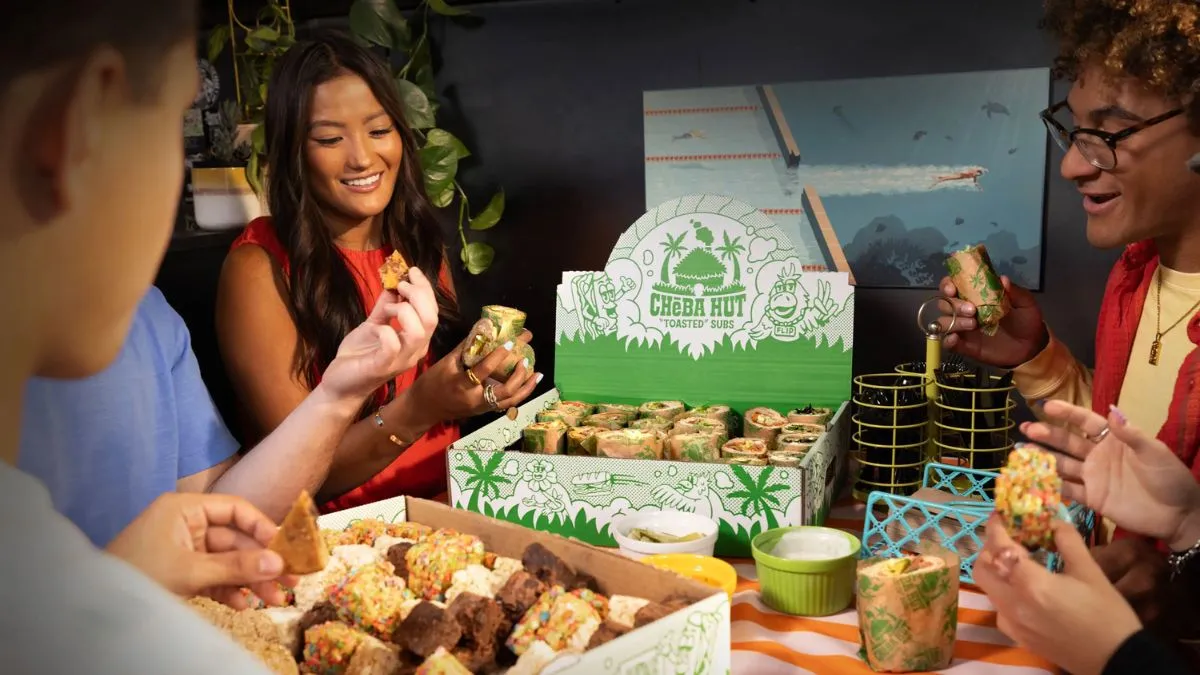
Cheba Hut Franchisee Builds Growth Through Local Marketing and Community Connections
As restaurant brands invest more heavily in digital advertising, one of Cheba Hut’s leading multi-unit franchise operators is demonstrating that traditional community marketing can still generate significant results.
Isaac Montoya, founder and CEO of Wahi Brands, has expanded from an employee inside the Cheba Hut system into one of the brand’s prominent multi-unit franchisees. His growth strategy combines strong restaurant operations with a deliberate focus on building relationships in the communities surrounding each location.
Wahi Brands recently opened its eighth Cheba Hut restaurant, expanding the group into Virginia for the first time. The Midlothian opening represents another step in a much larger development strategy that could significantly increase the franchise group’s footprint over the next several years.
From Cheba Hut Employee to Multi-Unit Franchisee
Montoya’s relationship with Cheba Hut began long before he became a franchise operator.
While attending the University of New Mexico, he joined the sandwich concept as a crew member in 2012. Within approximately six months, he had advanced into a general manager position. His involvement eventually progressed further when he became an equity partner in Cheba Hut’s original New Mexico restaurant.
That experience provided Montoya with an unusually detailed understanding of the business. Rather than entering the franchise system strictly as an investor, he learned the concept from inside the restaurant before becoming an owner.
Over time, Wahi Brands expanded its Cheba Hut portfolio across New Mexico, Texas and Montana before entering Virginia.
The group also has future development plans involving Michigan, potentially giving Wahi Brands Cheba Hut operations across five states.
Grassroots Marketing Remains Central to the Strategy
One of the distinguishing elements of Wahi Brands’ expansion strategy is its continued emphasis on local marketing.
Instead of relying exclusively on paid digital campaigns, restaurant managers are encouraged to become visible members of their communities. General managers and assistant managers participate in events, introduce people to the food and build relationships with organizations located around their restaurants.
College and school events are among the opportunities the group uses to put the brand directly in front of potential customers. Food samples and promotional offers can turn an unfamiliar restaurant into something consumers have personally experienced.
The strategy is straightforward: awareness becomes more valuable when consumers can actually try the product.
That philosophy has remained important even as restaurant marketing has become increasingly driven by social media, delivery platforms, loyalty programs and digital advertising.
Community Partnerships Create More Than Brand Exposure
Wahi Brands also uses community involvement to establish deeper connections around individual restaurants.
Its locations have worked with nonprofit and charitable organizations, including initiatives focused on helping people experiencing food insecurity.
For a franchise system, this type of participation can serve a different purpose than conventional advertising. Rather than simply placing a message in front of consumers, the restaurant becomes an active participant in its local market.
That approach fits naturally with Cheba Hut’s broader brand strategy.
Although customers encounter the same core concept across the system, individual restaurants are designed to incorporate elements of their communities. Local artwork, partnerships, events and other market-specific touches can give individual locations their own personality while maintaining the broader Cheba Hut identity.
Strong Restaurant Sales Support Continued Expansion
Wahi Brands’ growth has also been accompanied by notable store-level sales.
The franchise group has reported average unit volume of approximately $2.8 million across its Cheba Hut portfolio, while some of its restaurants have generated annual sales approaching $4 million.
For comparison, Cheba Hut franchise restaurants averaged approximately $2.3 million in net sales during 2025.
Strong unit economics are particularly important for multi-unit franchise operators. Rapid expansion can become difficult to sustain when existing restaurants are underperforming, making store-level execution an important component of Wahi Brands’ development strategy.
Montoya has previously emphasized investments in leadership, training, operational infrastructure and data as the organization adds restaurants.
Cheba Hut Finds Customers Beyond College Markets
Cheba Hut’s unconventional identity has historically made college communities a natural market for the concept.
However, Wahi Brands is seeing opportunities beyond traditional campus-oriented locations.
Families and suburban customers are increasingly part of the customer mix at some of the group’s restaurants. That could potentially create additional development opportunities in markets that franchisees might previously have overlooked.
For a growing restaurant franchise, expanding the addressable customer base can be just as important as expanding geographically.
If a concept can perform in suburban communities as well as college-oriented trade areas, franchise operators gain considerably more flexibility when evaluating future sites.
Virginia Becomes an Important Growth Market
The opening in Midlothian marks Cheba Hut’s entrance into Virginia and represents the beginning of Wahi Brands’ development plans in the state.
The franchise group previously committed to a 10-unit Virginia development agreement, giving it substantial room to expand throughout the market.
Additional Virginia restaurants are already planned, including development in Colonial Heights.
Montoya expects Wahi Brands’ Cheba Hut portfolio to reach approximately 14 operating restaurants by the end of 2027.
Meanwhile, expansion into Michigan would further broaden the company’s geographic footprint.
Local Execution Could Be Key to Scaling the Brand
Wahi Brands’ growth illustrates an important reality of multi-unit restaurant franchising: national brand awareness and local relevance do not have to compete with one another.
Digital advertising can introduce a concept to thousands of consumers quickly. But community events, partnerships, sampling and face-to-face interaction can build a different kind of relationship.
For Wahi Brands, the strategy is to combine both.
As Cheba Hut moves into new territories, maintaining that community-level involvement may become increasingly important. A restaurant entering a new state cannot automatically rely on the familiarity it enjoys in established markets.
Building recognition one neighborhood at a time gives franchise operators another way to establish the brand.
For Montoya, who started behind the counter before becoming a multi-state franchise operator, that local-first approach remains part of the foundation as Wahi Brands prepares for its next stage of expansion.
Explore more about Cheba Hut Franchise opportunities.
Inspired by Weed Man's growth story?
Explore franchise opportunities and build your own legacy.
Explore OpportunitiesGet the latest franchise insights
Subscribe to our newsletter and never miss an updated.