How Weed Man Franchisees Built a Nearly 40-Location Empire
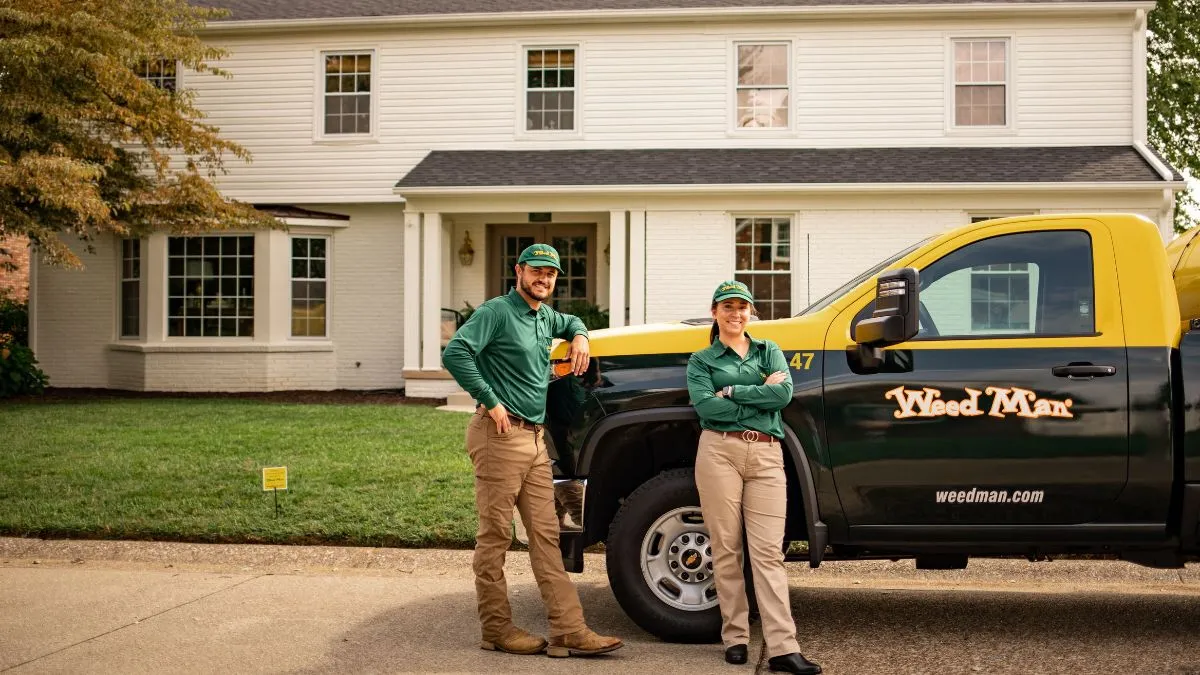
Terry and Andy Kurth turned one lawn care territory into Weed Man’s largest multi-unit ownership group
What began as a college job for Andy Kurth eventually became a leadership role in a $105 million lawn care business.
In 2005, Andy was studying soil science, turf management and agribusiness at the University of Wisconsin–Madison. Like many college students, he wanted a summer job that could help cover his living expenses. He joined the local Weed Man operation, splitting his time between sales and lawn care services.
The opportunity was already familiar to his family. His father, Terry Kurth, had worked in the lawn care industry and played an important role in helping Weed Man expand from Canada into the United States, particularly across the Midwest.
Andy initially viewed the position as a way to earn extra money. That changed as he learned more about Weed Man’s operating model and saw the potential to build a long-term career within the franchise system.
From College Employee to CEO
Andy steadily took on more responsibility. He advanced from an entry-level team member to general manager, later became a co-owner and eventually moved into the CEO position.
Today, he leads Epic3, the family’s holding company and the largest multi-unit ownership group in the Weed Man franchise network. The organization has expanded from one Madison market to nearly 40 locations.
The size of the business has gone well beyond Terry’s original expectations. He initially believed the Madison operation could reach between $5 million and $6 million in annual revenue. By adding Milwaukee and the Appleton–Green Bay market, he thought the company might eventually grow to between $18 million and $20 million.
Instead, the family built a much larger operation by combining Weed Man’s established systems with strong local management and a capable frontline workforce.
Leadership Without Micromanagement
The transition from Terry’s leadership to Andy’s was gradual. Rather than holding tightly to every decision, Terry gave his son more authority as his experience increased.
That approach allowed Andy to develop his own leadership style while still benefiting from his father’s guidance. Terry now acts primarily as a mentor and strategic adviser, while Andy oversees the company’s daily direction and continued expansion.
Their ability to separate responsibilities has helped protect both their working relationship and their relationship as father and son. Terry has also acknowledged that Andy’s knowledge has grown to the point where the mentoring occasionally works in both directions.
For family-owned franchise businesses, that willingness to transfer authority can be essential. Growth becomes difficult when every decision must pass through the founder.
Putting Employees at the Centre of Growth
The Kurths believe their success is closely connected to the opportunities they create for employees.
As the company expanded, Andy’s motivation shifted from personal financial success toward building careers for other people. Epic3 developed a culture in which employees are encouraged to contribute ideas, express interest in new responsibilities and take an active role in their own advancement.
Andy describes this as a “hand-raiser culture.” Team members who want to grow are encouraged to speak up rather than wait to be noticed.
This approach supports the company’s goal of becoming an employer people actively choose. Employees are shown how the business plans to grow and how their careers may progress alongside it.
Epic3’s mission is built around three priorities: people, opportunity and community. Those values influence how the company treats employees, serves customers and participates in the markets where it operates.
The leadership team believes excellent customer service begins inside the organization. Employees are more likely to care for customers when they feel respected and valued at work.
Measuring Performance and Celebrating Success
A supportive workplace does not mean lowering expectations. Epic3 combines its people-first culture with clear performance standards.
Andy uses a company-wide evaluation process so employees understand what is expected of them. The organization also follows a “scoreboard culture,” using measurable results to encourage accountability and healthy competition.
Strong performance is recognized openly. When a customer praises an employee for exceptional service, that feedback is shared across the organization. Celebrating these moments reinforces positive behaviour and shows employees that their work matters.
The Kurths also believe companies must continue improving. In their view, a business is either moving forward or falling behind. That mindset has helped Epic3 maintain its focus even after becoming a major Weed Man franchise operator.
A Possible Third Generation
Another member of the Kurth family may eventually join the business. Andy’s nephew, Terry’s grandson, is completing a summer internship at the Madison branch and has expressed interest in working with the company after college.
However, the family is careful not to make participation an obligation. Andy would be happy to see his children become involved one day, but he wants them to make that decision independently.
It is the same freedom Andy received when a summer job unexpectedly became his career.
The Kurths’ journey demonstrates how multi-unit franchise growth can develop over time. Reliable systems provided the foundation, but leadership development, employee opportunity and a willingness to share responsibility turned one local operation into a business approaching 40 locations.
Explore more about Weed Man franchise opportunities.
Inspired by Weed Man's growth story?
Explore franchise opportunities and build your own legacy.
Explore OpportunitiesGet the latest franchise insights
Subscribe to our newsletter and never miss an updated.