



Established
1964
Franchise Units
600
Minimum Investment
$680,000
Franchise Fee
$35,000
Total Investment Range
$1,900,000
Home Based
No
Description
Few quick-service restaurant brands carry the emotional connection and brand recognition that Tim Hortons does. Known for its premium coffee, freshly baked donuts, breakfast sandwiches, and convenient drive-thru service, the brand has evolved from a Canadian favorite into a growing force in the U.S. quick-service coffee market.
In the United States, Tim Hortons positions itself as a value-driven, community-focused coffee franchise that competes in the highly profitable breakfast and beverage segment. With strong brand equity, simple menu execution, and a loyal customer base, it offers franchisees an opportunity to operate within one of the most resilient categories in food service: coffee and breakfast.
The U.S. coffee market continues to expand as consumers prioritize convenience, affordability, and speed. Tim Hortons delivers all three—supported by national brand recognition, strong drive-thru sales performance, and a menu built for high-frequency visits. For entrepreneurs seeking a scalable franchise model in the food and beverage sector, Tim Hortons represents a compelling opportunity.
Background
- Established: 1964
- Founders: Tim Horton and Jim Charade
- Industry Category: Quick-Service Restaurant (Coffee & Bakery)
- Parent Company: Restaurant Brands International
- Franchise Active Units: Approximately 600+ active U.S. locations
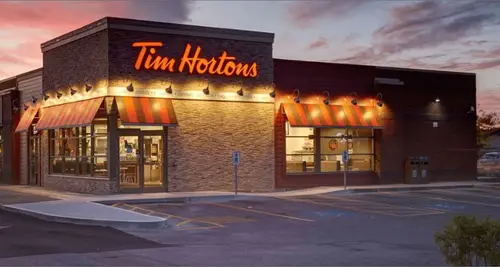
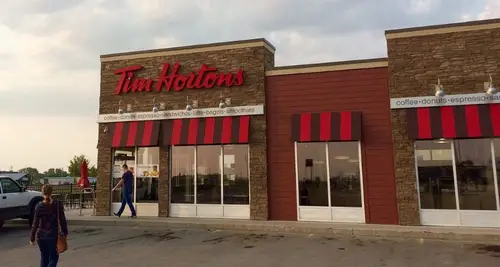
Tim Hortons was founded in Hamilton, Ontario, with a simple vision — serve great coffee and fresh baked goods at affordable prices. The brand expanded rapidly throughout Canada before entering the U.S. market. Over time, it evolved into one of the largest coffee chains in North America.
Today, Tim Hortons operates 5,500+ locations globally, with a significant footprint in both Canada and the United States. U.S. growth has been particularly strong in border states and high-traffic urban areas.
The brand’s journey includes modernization initiatives such as digital ordering, mobile app integration, loyalty programs, and updated store designs tailored to American markets.
As part of an international restaurant portfolio, Tim Hortons benefits from global restaurant management expertise, franchise development systems, and innovation across technology and operations.
Support Training
Tim Hortons provides a comprehensive support system designed to help franchisees launch and scale successfully.
Pre-Launch Support
-
Site selection and demographic analysis
-
Lease negotiation assistance
-
Store design and layout guidance
-
Construction support and equipment sourcing
-
Vendor and supply chain setup
-
Pre-opening marketing campaign
Initial Training
-
Multi-week classroom and hands-on training
-
Operational systems training
-
Food safety certification
-
POS and inventory management training
-
HR and staff management guidance
Operational Support
-
Ongoing field support visits
-
Performance benchmarking tools
-
Quality assurance audits
-
Product rollout training
-
Supply chain management
Marketing Support
-
National advertising campaigns
-
Digital app and loyalty program integration
-
Social media assets and promotional materials
-
Local store marketing guidance
Ongoing Business Development
-
Data analytics dashboards
-
New product innovation
-
Menu optimization strategies
-
Multi-unit expansion guidance
Ideal Candidate
Tim Hortons typically seeks serious, well-capitalized investors rather than first-time small operators. Ideal candidates often include:
-
Multi-unit restaurant operators
-
QSR industry professionals
-
Experienced entrepreneurs with management background
-
Investors with strong financial stability
-
Groups seeking long-term scalable opportunities
Key Characteristics
-
Strong leadership and team-building skills
-
Ability to manage high-volume operations
-
Commitment to brand standards
-
Willingness to follow established systems
-
Community-oriented mindset
Financial Capability
Prospective franchisees should have significant liquid capital and net worth to support development and working capital needs.
Location Preference
Prime territories typically include:
-
Urban commuter corridors
-
Suburban retail centers
-
Standalone drive-thru properties
-
High-traffic retail plazas
Multi-unit development agreements are common, especially in growth markets across the U.S.
Financial Detail
| Category | Estimated Investment (USD) |
|---|---|
| Total Estimated Investment | $680,000 – $1,900,000+ |
| Minimum Liquid Capital | $500,000+ |
| Net Worth Requirement | $1,000,000+ |
| Initial Franchise Fee | $35,000 – $50,000 |
| Royalty Fee | 4% – 6% of Gross Sales |
| Marketing/Advertising Fund | 3% – 4% of Gross Sales |
| Leasehold Improvements | $250,000 – $800,000 |
| Equipment & Fixtures | $150,000 – $400,000 |
| Initial Inventory | $15,000 – $30,000 |
| Training Expenses | $10,000 – $20,000 |
| Grand Opening Marketing | $10,000 – $25,000 |
| Working Capital (3–6 Months) | $100,000 – $250,000 |
| Estimated Break-Even Timeline | 2 – 4 Years |
| Potential Annual Revenue | $900,000 – $1.8M+ |