How a 16 Handles Franchise Hit $1M in 6 Months: A Case Study
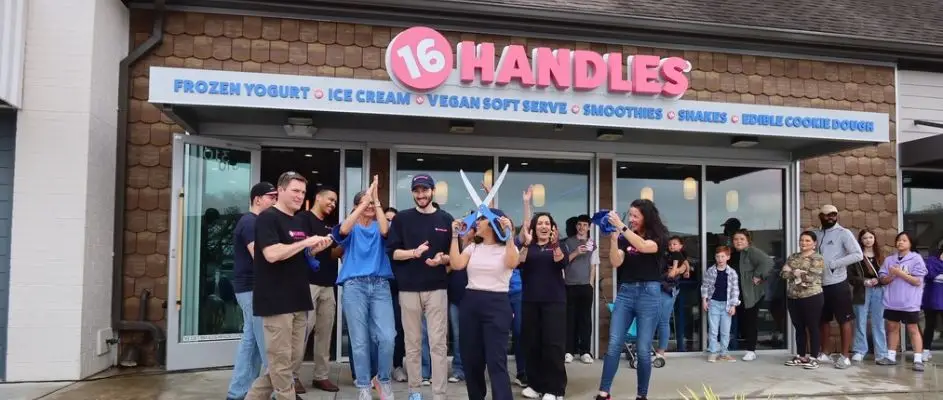
The Anatomy of a Seven-Figure Launch: How One Couple Scaled a 16 Handles Franchise in Record Time
The modern franchising landscape is often characterized by steady, incremental growth. However, every so often, a story emerges that defies standard industry timelines and sets a new benchmark for what is possible within the first year of operations. The recent performance of Ken and Sarah Barlow, who launched a 16 Handles territory in Columbia, South Carolina, is one such case study. By surpassing $1 million in gross revenue within their first six months, the Barlows have provided a masterclass in site selection, brand alignment, and local market penetration. This article analyzes the specific variables that contributed to this outlier success and what it means for the broader dessert franchise sector.
Identifying the Market Void: The Strategy of Reintroduction
The first pillar of the Barlows' success was a sophisticated understanding of their local demographic. While many entrepreneurs look for "the next big thing," the Barlows looked for what was missing. Columbia had once enjoyed a vibrant self-serve frozen yogurt scene, but over time, that presence had diminished. By recognizing that the demand for the product still existed but the supply had vanished, they utilized a "market reintroduction" strategy. They weren't just selling frozen yogurt; they were satisfying a latent demand that had been underserved for years.
From an analytical perspective, this reduced their customer acquisition cost (CAC). Instead of having to educate the public on what self-serve froyo was, they simply had to announce its return under a premium brand. 16 Handles, known for its innovation and New York City roots, provided the perfect vehicle for this. The brand's reputation for quality and its rotating menu of 16 flavors gave the Barlows a competitive edge over stagnant, older models of dessert shops.
Financial Engineering and the SBA 7a Milestone
Perhaps the most staggering metric of this launch was the couple’s ability to pay off their entire SBA 7a loan within five months of opening. In the world of small business lending, an SBA 7a loan is a common tool, but it is typically structured for a multi-year repayment. To retire the debt in under half a year suggests a level of cash flow and net margin that is rarely seen in the QSR (Quick Service Restaurant) space during the "ramp-up" phase.
This financial agility allowed the Barlows to move immediately from a debt-servicing posture to a growth-reinvestment posture. By the end of their first six months, they had not only cleared their primary debt but had also reimbursed themselves for nearly half of their initial equity investment. This level of liquidity is vital in the current economic climate, providing a "financial cushion" that allows the business to weather seasonal fluctuations or invest in secondary territories without the burden of high-interest overhead.
Operational Synergy: The Veteran and the Manager
The human element of this success story cannot be overlooked. The Barlows represent a "power couple" dynamic where disparate skill sets create a balanced operational structure. Ken Barlow, a Marine Corps veteran with 25 years in the IT sector, brought a level of logistical precision and technical oversight to the back-end operations. His military background likely contributed to the disciplined execution of the brand’s SOPs (Standard Operating Procedures), which is often the difference-maker in franchise consistency.
On the front end, Sarah Barlow’s extensive background in restaurant and retail management ensured that the "guest experience" was prioritized. In the dessert industry, where the product is a luxury and an experience rather than a necessity, the quality of service is the primary driver of repeat business. By dividing their roles—Ken focusing on the "machine" and Sarah focusing on the "mission"—they avoided the common pitfalls of partnership friction and ensured that every facet of the business was managed by a specialist.
Community Integration as a Scalable Asset
A common mistake in franchising is relying solely on the national brand’s marketing. The Barlows bypassed this by implementing a hyper-local grassroots strategy. Within their first half-year, they hosted over 43 fundraisers. This wasn't just philanthropy; it was strategic community integration. By partnering with local schools, sports teams, and non-profits, they turned their storefront into a community stakeholder.
These partnerships generated over $17,000 in sales directly for the organizations involved, but the secondary gain was far greater: they created thousands of brand advocates. When a local high school team hosts a fundraiser at a froyo shop, the families of those athletes become lifelong customers. This "social proof" is more effective than any digital ad campaign and was a primary driver of the long lines seen during their record-breaking grand opening weekend.
Future Projections: The Froyo Renaissance
The success in Columbia mirrors a broader trend in the global frozen yogurt market, which is currently valued at approximately $2 billion and projected to grow to $2.65 billion by 2034. The shift toward health-conscious treats, vegan options, and gluten-free alternatives has revitalized the category. 16 Handles has stayed at the forefront of this trend by offering products like Strawberry Kefir and French Fry-flavored froyo, appealing to both the health-conscious parent and the adventurous Gen Z consumer.
As the Barlows look toward their second location, their story serves as a beacon for the franchise industry. It proves that when a premium brand is paired with disciplined, community-focused operators, the path to seven-figure success can be significantly shorter than traditional wisdom suggests. For the franchising world, the Barlows aren't just owners; they are the new standard for excellence in the field.
Inspired by Weed Man's growth story?
Explore franchise opportunities and build your own legacy.
Explore OpportunitiesGet the latest franchise insights
Subscribe to our newsletter and never miss an updated.